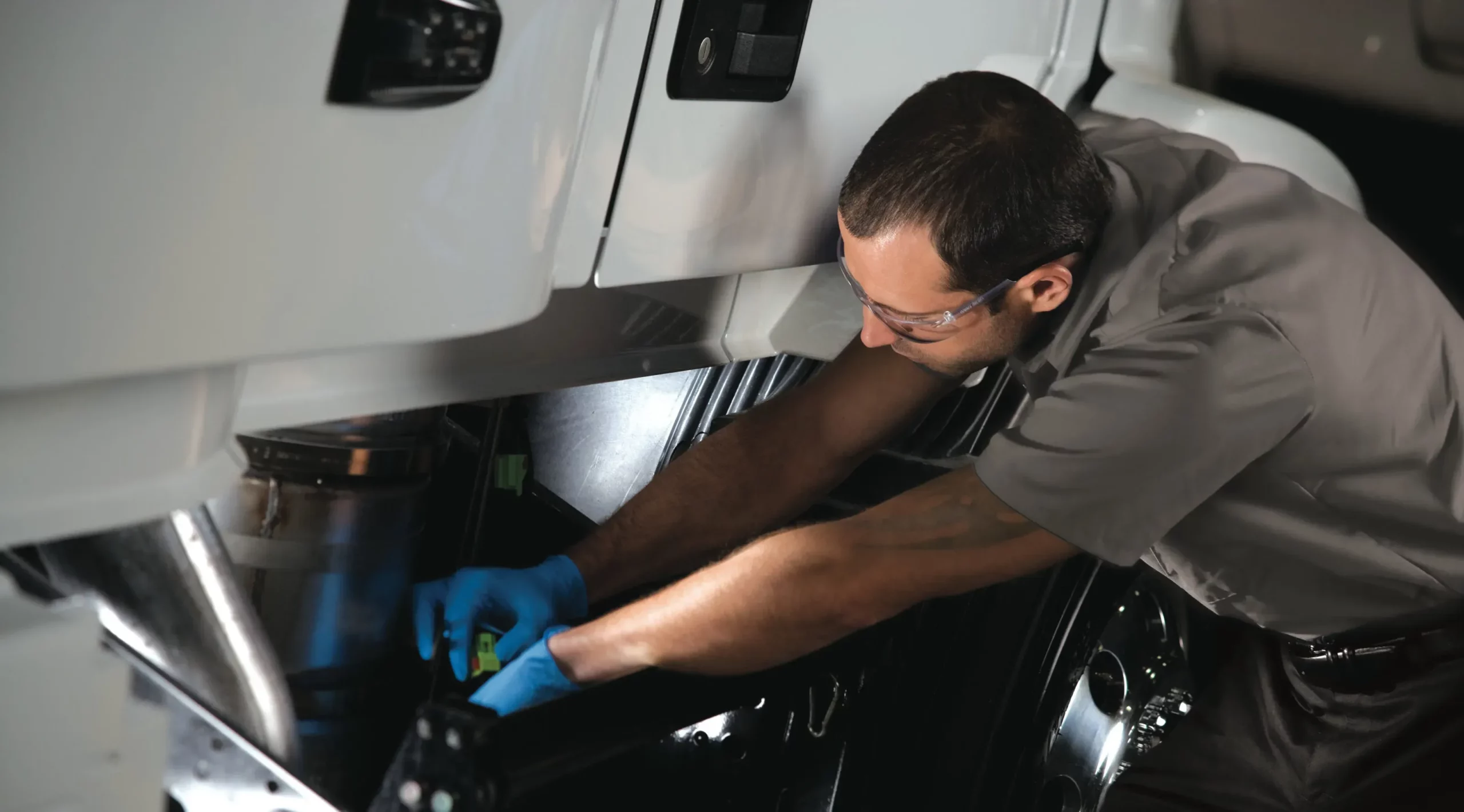
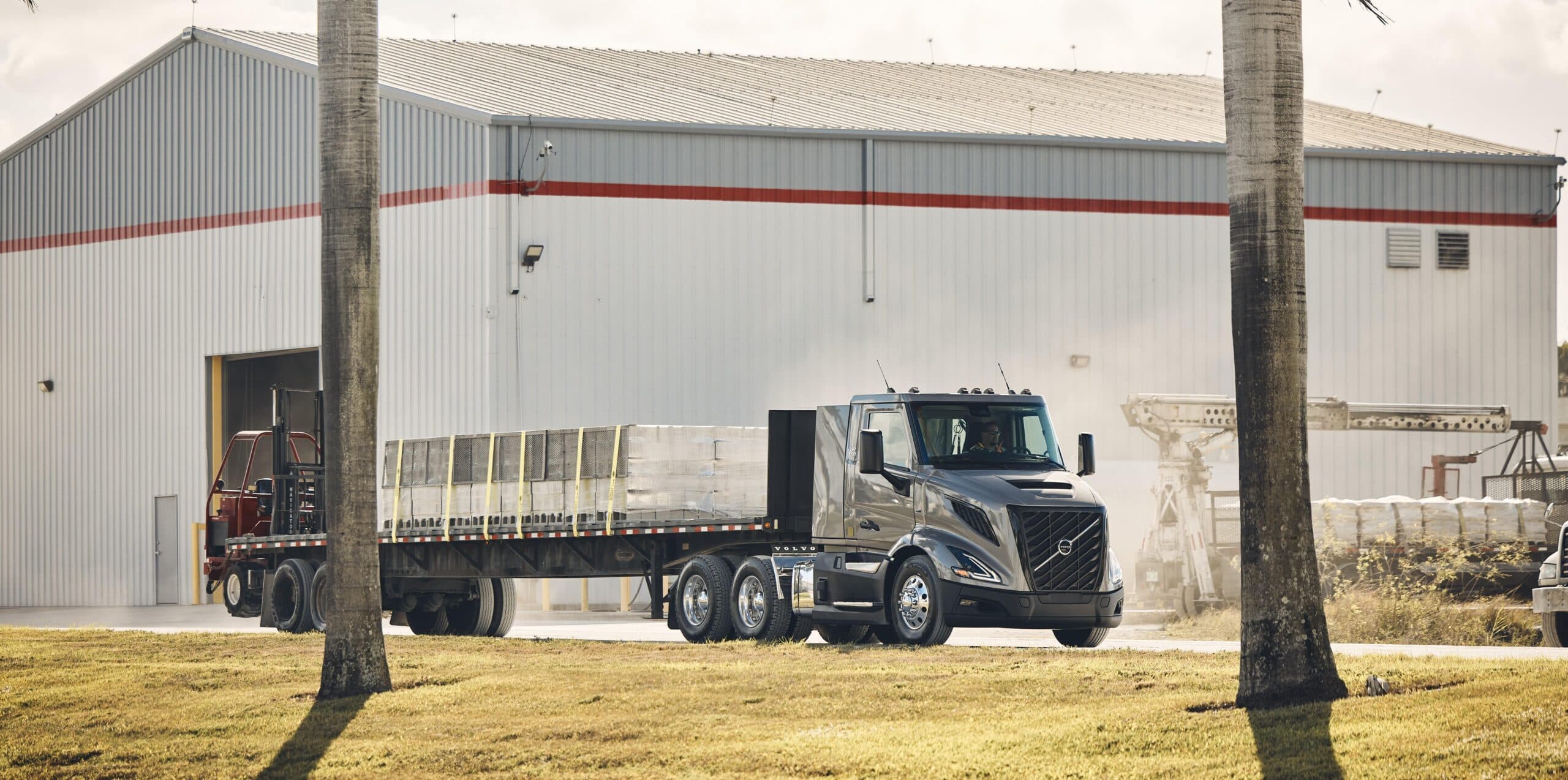
Mack currently offers six engine options across its truck lineup: three everyday diesels built around the MP7 and MP8, two 13-liter flagship engines in the MP13 line, and the Cummins X10 — the newest engine in Mack's long-running Cummins option, now offered in the redesigned Granite. Picking the right one shapes your fuel bill, your payload, and your uptime for years, so here's how they stack up and which applications each one fits best.
The MP7 and MP8: Mack's Everyday Diesels
This trio has long been Mack's weight-sensitive, cost-conscious lineup — engines built to maximize payload and keep per-mile costs down in vocational and regional work.
Mack MP7
- Horsepower: 325–425 HP
- Torque: 1,260–1,560 lb-ft
- Displacement: 11 liters
The MP7 is Mack's lightest and least expensive engine, built for applications where weight matters more than raw power. It comes in over 390 lbs lighter than the MP8, which helps maximize payload in weight-sensitive work like bulk hauling, and it produces less soot thanks to Mack's wave piston design. A one-piece valve cover also makes it simpler to service than engines with two-piece covers.
Weight-sensitive vocational work and shorter routes — refuse trucks, bulk haulers, and lighter-duty applications where every pound of payload counts.
Mack MP8
- Horsepower: 415–505 HP
- Torque: 1,460–1,860 lb-ft
- Displacement: 13 liters
Step up from the MP7 and you get the MP8 — Mack's longtime all-purpose workhorse. It's built to shoulder heavier vocational and highway loads, from Mack Granite dump trucks to Mack Pinnacle tractors. The MP8 uses the same wave piston combustion technology as the MP7, along with the PowerLeash engine brake and a two-speed coolant pump that gears down when full cooling isn't needed to save fuel.
Heavier vocational and highway work that needs more muscle than the MP7 can provide, without stepping up to a 13-liter MP13.
Mack MP8HE
- Horsepower: 415–445 HP
- Torque: 1,760–1,860 lb-ft
- Displacement: 13 liters
The MP8HE takes the MP8 platform and adds Energy Recovery Technology (ERT), which captures heat that would otherwise be lost and converts it back into torque at the crankshaft. That lets the engine run at a lower 1,000–1,100 RPM without sacrificing performance, which is where the fuel savings come from. It's best suited to flat grades or rolling hills with light to moderate payloads at higher road speeds — outside those conditions, you won't see the full efficiency benefit. The HE's fixed-geometry turbo also has fewer moving parts than the standard MP8's variable geometry turbo, meaning better durability and generally cheaper service.
Fuel-focused highway operations running lighter loads over flatter terrain, where maximizing miles per gallon outweighs the need for peak horsepower.
The MP13: Mack's Flagship Power
Mack's newest and most powerful engines, and now the standard powertrain across its current highway and vocational lineup.
Mack MP13
- Horsepower: Up to 540 HP
- Torque: Up to 1,950 lb-ft
- Engine braking: Up to 630 HP
- Compression ratio: 20:1
- Dry weight: 2,691 lbs
The MP13 is Mack's most powerful engine ever built, delivering peak torque as low as 900 RPM for stronger low-end pull and better fuel economy at cruise. A stronger, lighter engine block, redesigned 7-wave piston bowl, and new turbocharger all work together to boost performance, while every component is built for a 500,000-mile service life. A pre-turbine throttle adds more than 20% stronger engine braking for steep grades.
Mack MP13HE
- Horsepower: 415–505 HP
- Torque: Up to 1,950 lb-ft
- Displacement: 13 liters
Like the MP8HE, the MP13HE pairs Mack's flagship engine with turbo compounding to capture exhaust energy and feed it back to the crankshaft as usable power. A fully insulated turbo compressor recovers more of that energy while keeping cab temperatures lower for driver comfort, and a dual-butterfly EGR valve design improves flow and fuel efficiency. It trades a bit of peak horsepower versus the standard MP13 for a meaningful gain in fuel economy.
Long-haul highway fleets prioritizing fuel efficiency above outright horsepower, currently available in the Mack Pioneer.
The Cummins Option: X10
- Horsepower: 350–450 HP
- Torque: 1,250–1,650 lb-ft
- PTO capability: 590 lb-ft continuous, up to 664 lb-ft intermittent
Mack has offered Cummins engines in the Granite for years — the Cummins ISL and the L9N natural gas engine have both been available options in past model years. The X10 is the newest addition to that arrangement: a clean-sheet Cummins design (launched in 2025 to replace the L9 and X12) that Mack added to the redesigned Granite lineup in 2026 as part of its EPA 2027 powertrain plans. It's engineered to meet the 2027 NOx emissions requirements using a 48-volt electrical system that heats emissions components for a cleaner cold start, and it's paired with an Allison automatic transmission rather than Mack's mDRIVE. Its higher PTO output is built with vocational auxiliary equipment in mind.
Vocational and construction applications that want strong PTO performance and 2027 emissions compliance without stepping up to the 13-liter MP13.
FAQ: What Engines Do Mack Trucks Use?
What engines does Mack currently offer? Six: the MP7, MP8, and MP8HE among Mack's everyday diesels, the MP13 and MP13HE flagship engines, and the Cummins X10, available in the redesigned Granite.
Is a Cummins engine new for Mack? No — Mack has offered Cummins options in the Granite for years (including the ISL and the L9N natural gas engine). The X10 itself is a new Cummins design, added to the Granite lineup in 2026.
What's the difference between the MP8 and MP8HE? The MP8HE adds Energy Recovery Technology to capture exhaust heat and convert it to torque, improving fuel economy in the right applications — flatter terrain, lighter loads, higher road speeds. The standard MP8 is the more versatile, all-purpose option.
What's the most powerful Mack engine? The MP13, delivering up to 540 HP and 1,950 lb-ft of torque.
Which Mack models come with the MP13? The MP13 currently powers the Anthem, Pioneer, Granite, and Keystone.
How do I know which engine is right for my operation? It depends on your duty cycle, payload, terrain, and how long you plan to run the truck. Our new truck sales team can help you match the right engine and transmission to the work you do — including how the upcoming 2027 lineup changes might factor into your decision.
Choosing the right engine can have a real impact on your performance and operating costs down the road. If you're still weighing your options, talk to your TEC Equipment sales rep — our team is trained to help you match the right Mack powertrain to your work.